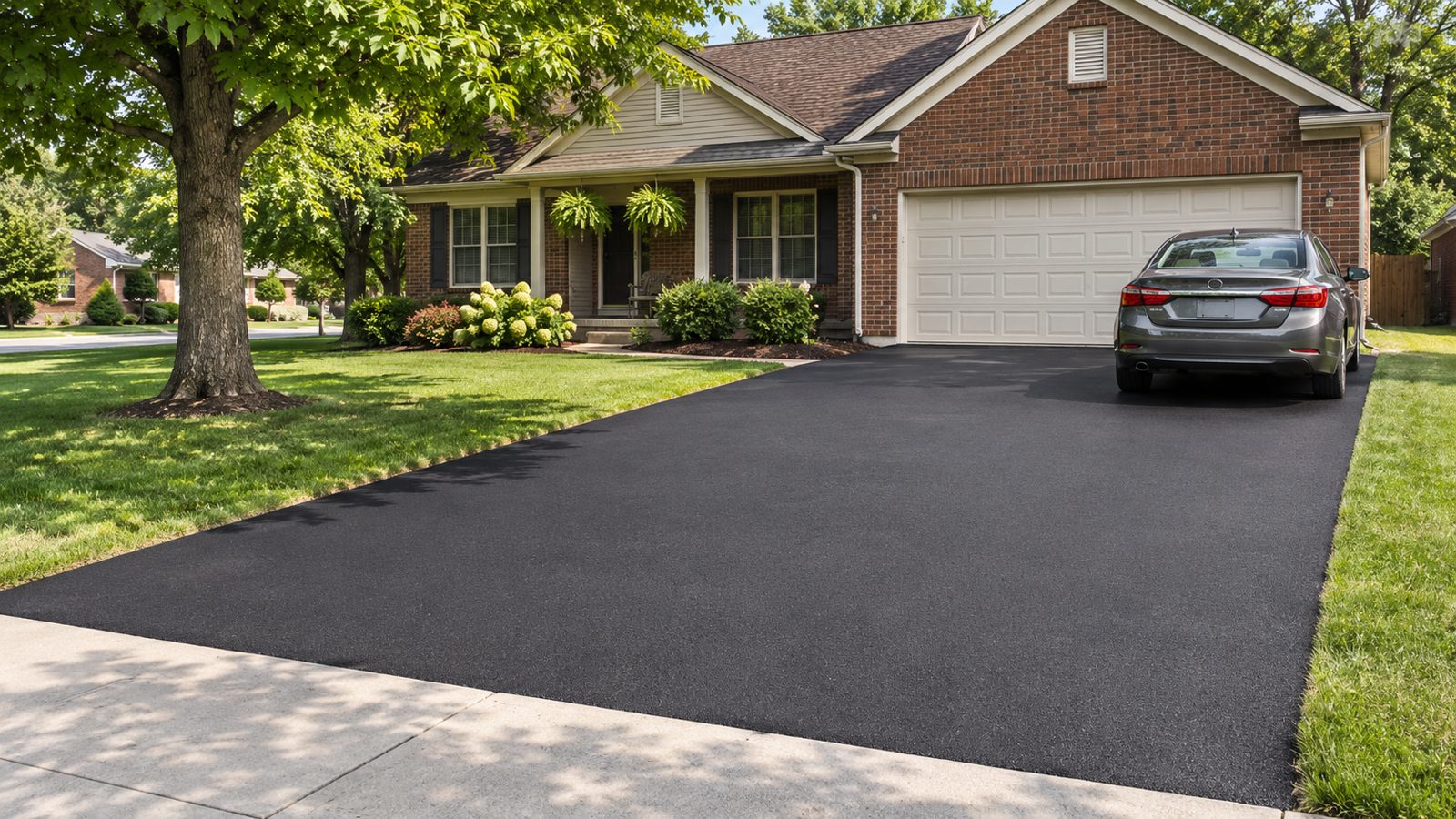
Farm lanes built for trucks, not just cars.
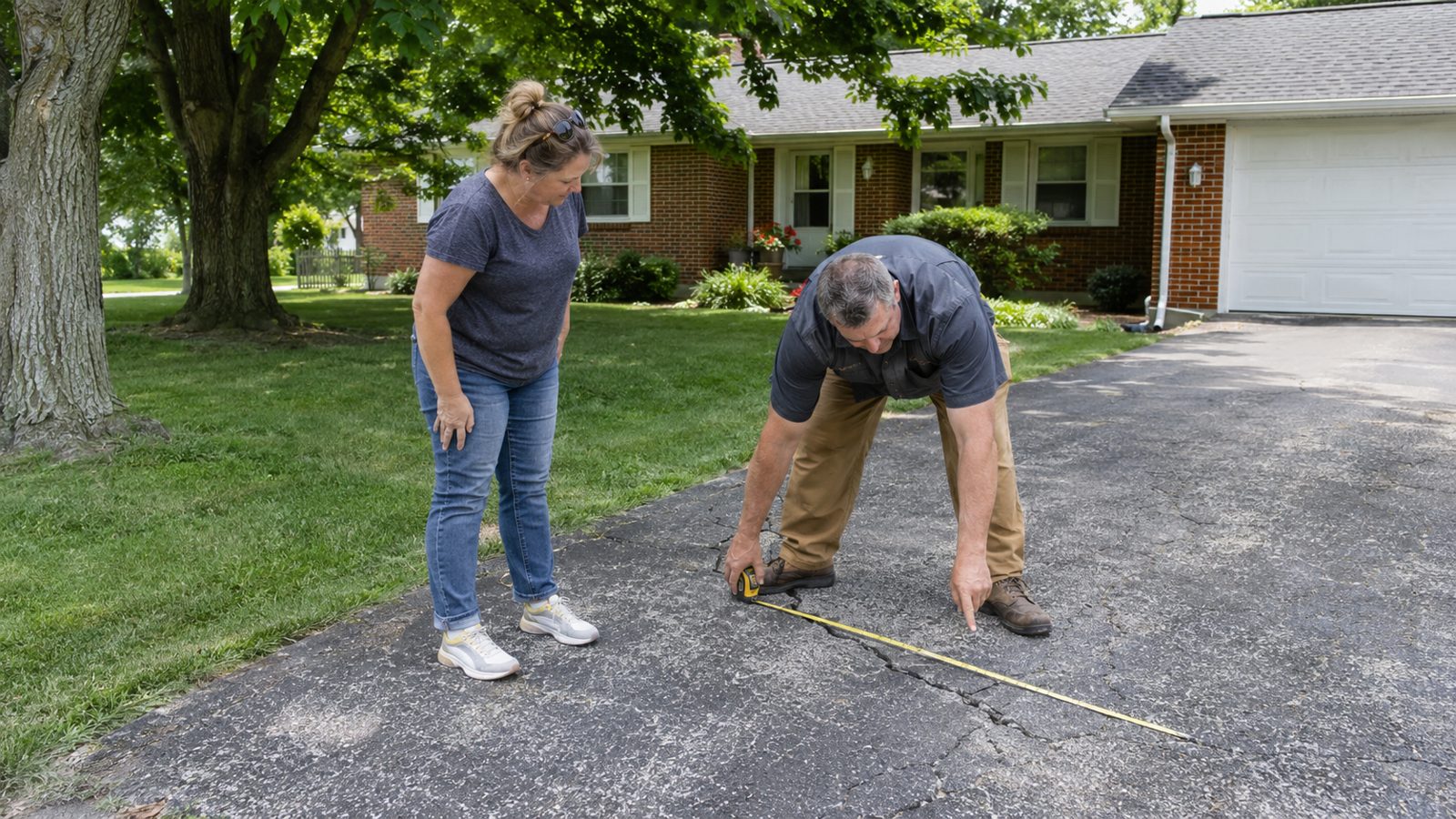
We look at the old surface and the base under it, check drainage and slope, and explain resurfacing versus a full replacement.
The price per square foot in writing, with removal, grading and permits listed separately. You decide, with no pressure.
Prefer to talk it through? Call (502) 653-1880.
Cropper is an unincorporated community in northeast Shelby County. It takes its name from James Cropper, a blacksmith and storekeeper who built the first house there in the 1790s and served as its first postmaster, and the Louisville and Nashville Railroad opened a depot on the east end of town in 1855 (source). The country around Cropper is working farmland, and a driveway here often has to handle grain trucks, cattle trailers, hay wagons and tractors. Asphalt laid at a standard car-driveway thickness on a thin base will rut and break under that kind of weight. When we pave in Cropper, we start by asking what drives on the lane, then plan the base and the asphalt around the heaviest load it carries.
South of Cropper on KY 43, the Bird Octagonal Mule Barn and the house called Bird's Nest were both added to the National Register of Historic Places in 1988 (source).
Farms like these show how long people have been working this land. Their lanes and barn lots were built for horses and wagons, and paving them for modern trucks takes more base than a house driveway.
The weight of a loaded truck goes through the asphalt into the stone base and the soil below. A thicker, well-compacted base spreads that weight so the surface does not crack or rut. The asphalt itself may need to be thicker too.
We ask what uses the lane, how often and how heavy, and write the planned base and asphalt thickness on the quote. That way you can compare quotes on the same terms.
Trucks and trailers need room to turn, and the spots where they turn take the most wear. Tight turns with heavy loads can scuff and tear fresh asphalt. We look at where vehicles swing around, where they back up to a barn, and where they park.
Sometimes a wider turnaround or a reinforced area at the barn makes sense. Other times gravel is still the better choice for a muddy barn lot, and we will say so.
Farm drives see oil and fuel drips from equipment, which soften asphalt over time. Once the new surface has cured, a sealcoat helps protect it. We tell you when the drive is ready and how often to plan on resealing it.
Tell us how long the lane is, what drives on it, and what condition it is in now. We come out to Cropper, walk it with you and leave a written quote with the price per square foot. Call (502) 653-1880 or use the form.
We plan base and thickness around the trucks and equipment that use the lane.
We look at turnarounds and barn approaches where wear is heaviest.
We tell you when part of a barn lot is better left in stone.
Need a lane that holds up to farm traffic in Cropper? Call (502) 653-1880 for a free estimate.
Free — no obligations